
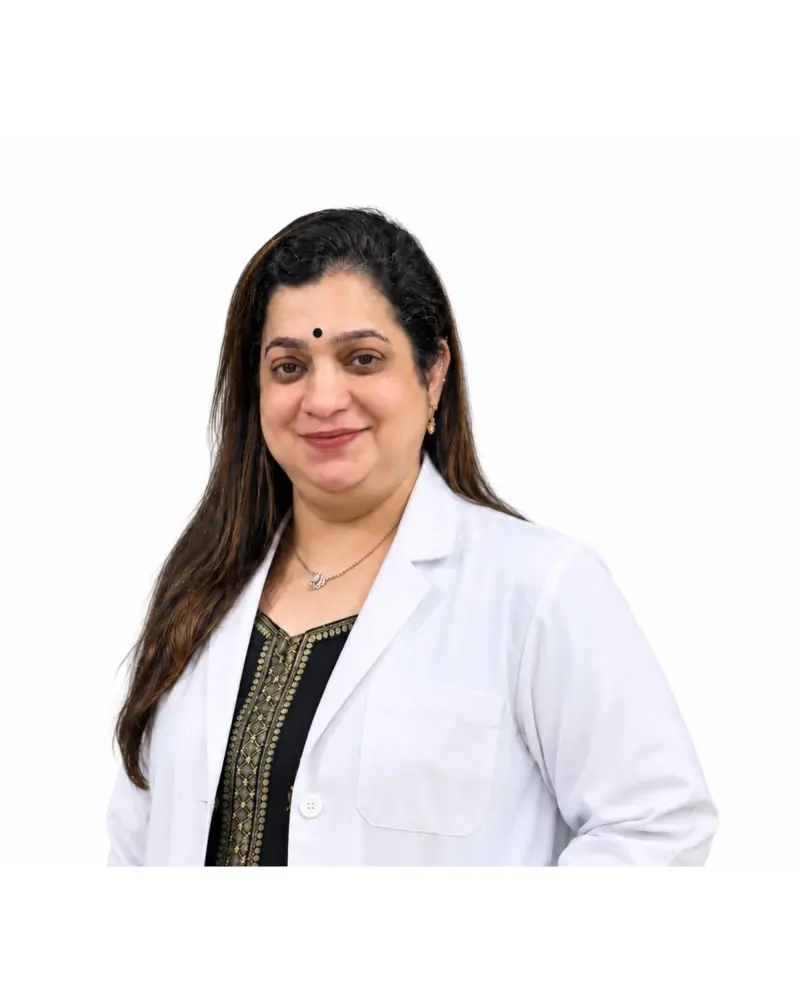
Dr Vidya Shetty
GynaecologyInfertility specialist and laparoscopic surgeon.
View profileEndometriosis is a common, long-term condition that can cause severe period pain, pelvic pain and difficulty conceiving. It is also frequently missed. Here's what it is, how it's diagnosed and how it's treated.
Endometriosis is a condition in which tissue similar to the lining of the uterus grows outside the uterus, most often on the ovaries and pelvic lining. It affects roughly 1 in 10 women of reproductive age. The most common symptoms are severe period pain, pelvic pain, pain during sex and difficulty getting pregnant. It is diagnosed through a detailed history and examination, imaging and sometimes laparoscopy, and treated with pain relief, hormonal treatment, surgery or a combination — tailored to your symptoms and fertility plans.
Endometriosis occurs when tissue similar to the endometrium — the lining of the uterus — grows in other places, most commonly on the ovaries, the fallopian tubes and the lining of the pelvis. This tissue responds to the monthly hormonal cycle, causing inflammation, pain and, over time, scar tissue (adhesions) that can bind pelvic organs together.
The World Health Organization estimates that endometriosis affects around 10% of women and girls of reproductive age worldwide. Because period pain is so often normalised, many women live with symptoms for years before they are diagnosed.
The severity of symptoms does not always match the amount of endometriosis present — some women with extensive disease have few symptoms, and some with small areas have severe pain. That is why a careful assessment matters.
Diagnosis begins with a detailed conversation about your symptoms and cycle, followed — with your consent — by an examination. An ultrasound scan can identify endometriosis cysts on the ovaries (endometriomas) and deeper disease in experienced hands, and MRI is sometimes used. Laparoscopy (keyhole surgery) allows the gynaecologist to see and, where appropriate, treat endometriosis at the same time.
You don't need to wait for a definitive surgical diagnosis before starting treatment: if your symptoms strongly suggest endometriosis, your gynaecologist may recommend beginning medical treatment first.
At Narika, these aren't separate referrals. Our gynaecologists, physiotherapist and psychologist plan your care together.
Many women with endometriosis conceive naturally. For some, endometriosis makes conception harder — by affecting the ovaries, the fallopian tubes or the pelvic environment. If you are planning a pregnancy, it's worth discussing this early so your treatment supports that goal. Dr Vidya Shetty, our fertility and laparoscopy specialist, can assess your situation.
Every woman's situation is different. A consultation with our gynaecologist, physiotherapist or psychologist gives you a diagnosis and plan made for you.
Written by the Narika clinical team. Last reviewed . This guide is general education; your Narika doctor will tailor advice to you. If you have severe or sudden symptoms, go to the nearest emergency department first — our team will support your follow-up care.
Book directly with the specialist who fits your needs.
Infertility specialist and laparoscopic surgeon.
View profile
Care through every stage of reproductive health.
View profileNo. Period pain that stops you from working, studying or sleeping, or that isn't helped by usual painkillers, is not something you should have to put up with. It can be a sign of endometriosis or adenomyosis and deserves a proper assessment by a gynaecologist.
There is currently no permanent cure, but endometriosis can be managed very effectively. Medication, surgery, physiotherapy and psychological support can greatly reduce pain and improve quality of life.
Symptoms often improve after menopause because oestrogen levels fall, but this varies from person to person. Your gynaecologist can advise on managing symptoms at every stage.
Our team will listen, examine only with your consent, and explain every option clearly.
Book a consultation